
Indian Head Massage
The treatment was brought from India to Britain in 1973 by an osteopath and massage therapist, Narendra Mehta, who was studying physiotherapy. He discovered that massages in Britain did not involve the head and consequently returned to India in 1978 to research the physiological benefits of IHM. Studying IHM and recording the skills used, Mehta developed the treatment to suit Western tastes. He named this treatment “Indian Champissage” from the Indian word “Champi” meaning “head massage”. Both Indian Head Massage and Champissage are used today.
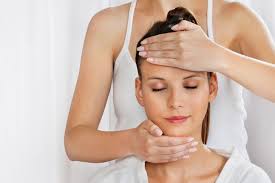
In the West, IHM has evolved as part of a stress management programme and incorporates pleasant smelling oils massaged into the neck and shoulders, as well as the back, arms, scalp and face.
Benefits of Indian Head Massage
Apart from the pampering aspect of the treatment, massage has many physiological and emotional benefits. IHM is known to:
• improve blood flow to the head and neck
• improve lymphatic drainage
• relieve muscular tensions
• relieve physical and emotional stress
• improve joint mobility
• promote deep relaxation
• help improve muscle tone
• help relieve eyestrain
• help relieve deep congestion in the head
• relieve stress and anxiety
• create a feeling of balance and well-being.
• uplifting
• improve hair and scalp conditions
The majority of people only worry about their hair's health when it starts to look dry or thinning. When the body is subjected to ill health or stress, the hair is often affected and can become dry. Healthy hair should be promoted from childhood with the help of regular massage, and Indian women use oils such as coconut or almond to help nourish the hair and to keep its shiny appearance.
How Often Should We Have An IHM?
This will depend on the client and the reason for treating. Some conditions respond well after one or two treatments. It is advisable to have an IHM treatment once a month as a preventative measure.
Training Option :1 day
Training Price :£ 150
Location :Waterlooville
Overview :As the name suggests, Indian Head Massage (IHM) has its origins in India and dates back over 5000 years. Originally used as a grooming technique in India, it has developed in the West to be a popular complementary therapy used by many for many different reasons. It can be performed anywhere as it can be applied through the clothes.
Models :Models will be provided
Accreditation :7 Points
Key Features :121 Personal training
Criteria :Massage Level 31 1
Schedule :Theory and then lots of practical
Enquire We’re an MHRA licensed broker.
All-in-one platform for aesthetic clinics. Manage bookings and digital consent easily. Reduce paperwork and save time. Secure client data and records. Built for modern practitioners.


Get in touch